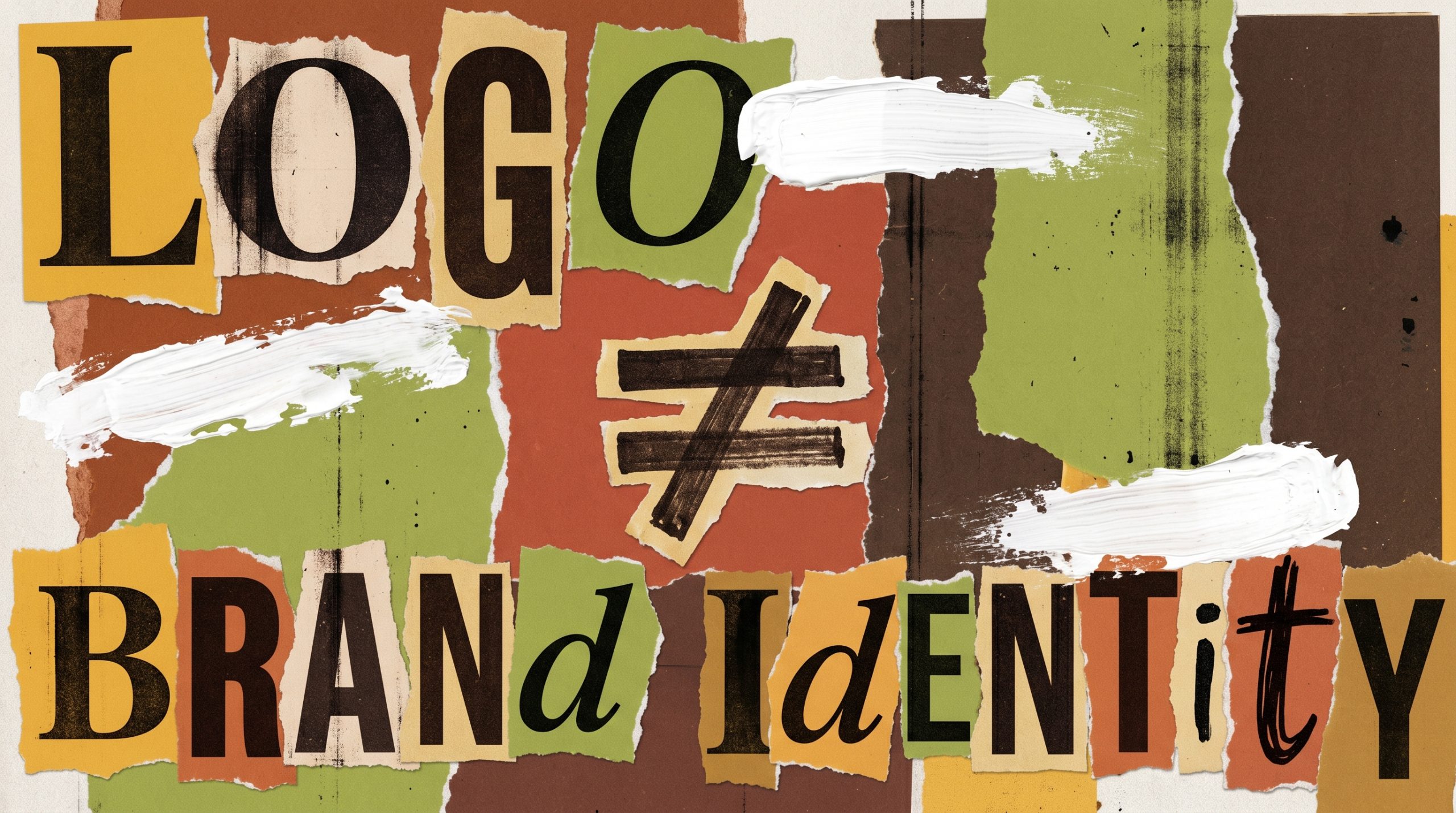
Logo vs. Brand Identity — What’s the Difference and Why It Matters
There’s a conversation I have with almost every new client. It usually starts with “I need a logo” and ends somewhere very different.
Not because a logo isn’t what they need. Sometimes it is. But more often, what they’re actually describing — without knowing the word for it — is a brand identity. And those are two very different things.
A logo is a mark. A brand is everything else.
Your logo is a symbol. It’s the visual shorthand for your business — the thing that goes on your business card, your sign, your website header. It needs to be distinctive, well-crafted, and appropriate for what you do. That part matters a lot.
But it’s still just a mark.
A brand identity is the complete visual system built around that mark. It’s your colour palette and what those colours communicate. It’s your typography and how it shapes the way people feel when they read your words. It’s the way your photography is styled, how your layouts breathe, what your voice sounds like in print. It’s the rules that make everything you produce feel like it came from the same place.
A logo without a brand identity is a good start. It is not a finished job.
Why the difference matters for your business
Here’s what happens when businesses skip the brand identity step.
They get a logo they like. They start using it. Then they need a website, so they pick some fonts they like. Then they need a brochure, so they find some stock photos that seem close enough. Then they need social graphics, so they grab a template from Canva and adjust the colours by eye.
Six months later, everything they’ve produced looks like it came from six different companies.
That inconsistency has a cost. It erodes trust. It makes you look smaller than you are. It tells people, without saying a word, that you’re still figuring things out.
A brand identity system prevents that from happening. It gives you — and anyone who ever works on your marketing — a clear set of decisions that have already been made. The guesswork is gone. Everything you produce from that point forward looks intentional, because it is.
What a brand identity actually includes
Every studio does this a little differently, but a proper brand identity delivers at minimum:
The deliverable is a brand guide — a living document that travels with your business and grows with it.
So do you need a logo or a brand identity?
If you’re just starting out and you need something to put on a business card while you get off the ground, a logo might be the right call for right now. There’s nothing wrong with starting lean.
But if your business has been running for a few years and you’re still cobbling things together visually, you don’t have a brand problem. You have a brand identity problem. And that’s exactly what it’s designed to solve.